Electrical Engineering

​​​​​​​

Faculty of Electrical Engineering

About Us

Established in 1928, the Faculty of Electrical Engineering has accomplished strong research and academic outcomes to become one of the country's leading institutions in this field. The Faculty is home to six departments, creating a vibrant environment with much to offer to undergraduate and graduate students.

The Faculty's history goes back to 1928, when it was established as the institute of higher education in the Ministry of Post, Telegraph and Telephone. During its 90+ years of academic activity, the Faculty has trained many successful experts, executives, and highly-reputed academic professionals.

Faculty of Electrical Engineering
Since 1928
Est. Year
60+
Faculty Members
180+
Int'l Papers / Year
650+
Graduate Students
6
Departments

Research

Communications
Communications

Traditional communications, optical communications, and telecommunication circuits and systems.
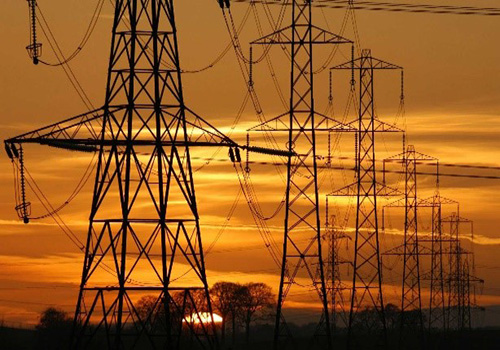
Research Areas
Electromagnetic Waves Analysis and Simulation
Information Theory, Coding, and Secure Communications
Wireless and Mobile Communications
Optics, Plasmonics, Materials and Devices
Antennas and Microwave
Digital Signal Processing
RF and Microwave Circuits
Radar Systems
Labs
Broadband Wireless Communication and Signal Processing Lab
Coding and Cryptography Laboratory
Optical Communications and Nano-optics Laboratory
Radar Advanced Technologies Laboratory
Electromagnetic Simulation Laboratory
Power Systems
Power Systems

Electric power generation, transmission, dispatching, power electronics, and electric machinery.
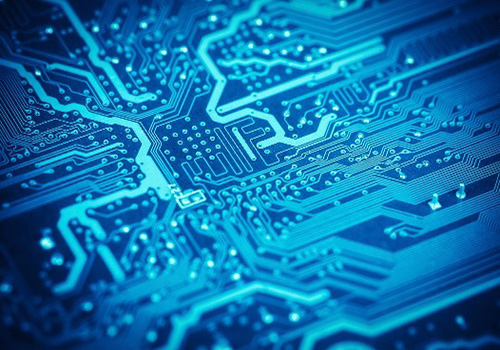
Research Areas
Power Systems Dynamics
High Voltage and Insulation
Power Electronics and Electrical Drives
Power Quality and Flexible Power Systems
Analysis and Design of Electrical Machines
Hybrid and Electrical Vehicles
Smart Grids
Labs
Electrical Machines and Vehicles Laboratory
Electric Power Quality and Power Control Lab
Advanced Motion Control & Power Electronic Lab
High Voltage Laboratory
Electronics
Electronics

Semiconductor Physics and Technology, and Electronic Circuits and Systems.

Research Areas
Microtechnology and Sensors
Solid-State Physics and Devices
Nanotechnology and Nanoelectronics
Quantum Electronics
Analog and RF Circuits and Systems
Digital and VLSI Systems
Computer Systems, Networks and Sensor Networks
Labs
Electronic Materials Laboratory (EML)
Semiconductor Devices Laboratory
Research Lab for Integrated Circuits (ICAS)
High Frequency Circuits and Systems Lab (HFCAS)
Systems and Control
Systems and Control

Fundamental theory to application-oriented issues in practical environments across industry and academia.
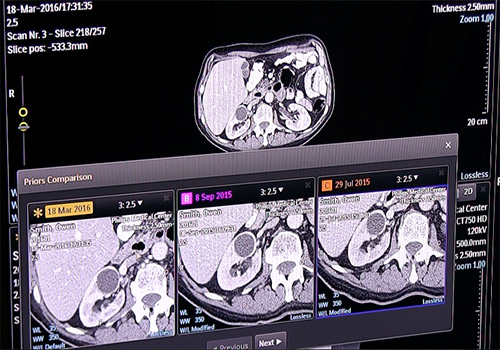
Research Areas
Adaptive and Nonlinear Control
Bio Mechatronics
Fractional Order Systems and Controllers
Intelligent Control & Industrial Systems Control
Model Predictive and Optimal Control
Networked Control Systems & Robotics
Labs
Industrial Control Laboratory
Smart Systems & Advanced Automation Laboratory
Robotics Laboratory
Computer Control & Instrumentation Laboratory
Biomedical Engineering

Inter-disciplinary collaboration between engineering, medicine, and biology. Joint dual-degree program with University of Picardie Jules Verne, France.
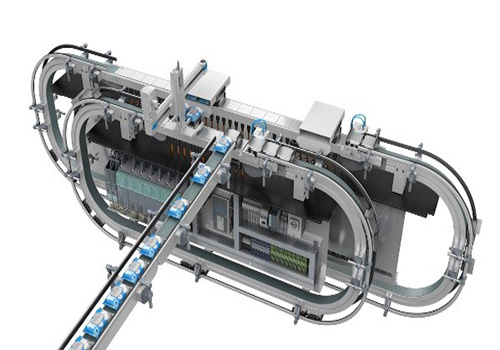
Research Areas
Biomedical Instrumentation
Biological Data and Signal Analysis
Brain-Computer Interfacing
Neural and Cognitive Engineering
Implantable Microsystems
AI in Biomedical Engineering
Labs
Bioelectric Artificial Organs Laboratory
Biomedical Measurement Laboratory
Machine Vision and Medical Image Processing Lab (MVMIP)
Mechatronics
Mechatronics

Jointly founded by Electrical and Mechanical Engineering in 2003. KNTU was first public university in Iran to establish this department.

Research Areas
Assistive Robotics
Biomechatronic Systems & Bio-MEMS
Fault Diagnosis
Intelligent Systems & System Identification
Wearable Technologies
Labs
Fault Detection and Identification Laboratory
Mechatronics Laboratory (Electrical Eng.)
Mechatronics Laboratory (Mechanical Eng.)

Research Centers

CReaTech
Center for Research and Technology (CReaTech)

A place for cutting-edge inter-disciplinary and multi-disciplinary activities, comprising 21 research thrusts. Provides office halls with up to 45 seats, lab space, a demo/expo hall, and a meeting room. Research thrusts include: Assistive Robotic and Biomechatronic Systems, Brain–Computer Interface, Control of Cyber-Physical Systems, Energy Smart Grids, Fractional Order Systems, Functional Imaging, Information Theory, Micro- and Nanoelectronics, Millimeter Wave and THz Technology, Optical Networking, Photonics, Radar System Design, and more.
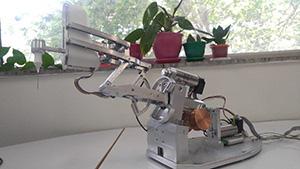
ARAS
Advanced Robotics and Automated Systems (ARAS)

Originated in 1997 with 20+ years of background in advancing academic education and research in Robotics. Current research themes:
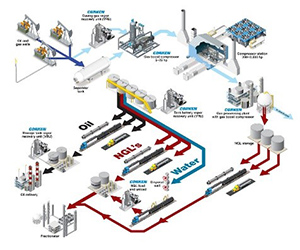
APAC
Advanced Process Automation and Control (APAC)

Established in 2007 with the vision of conducting research on theory and application of advanced control and automation systems.

Advanced process control & Condition monitoring
Mechatronics systems & Robot Design
Researches on control theories

Academics

The Faculty of Electrical Engineering offers B.Sc, M.Sc and PhD programs across six academic departments, aiming to present the endless possibilities that an electrical engineering student can achieve.

B.Sc. M.Sc. Ph.D.
Communications
Electrical Power Systems
Electronics
Systems and Control
Biomedical Engineering
Communications (two majors)
Electrical Power Systems (two majors)
Electronics (two majors)
Mechatronics
Systems and Control (two majors)
Biomedical Engineering
Communications
Electrical Power Systems
Electronics
Systems and Control

International Joint Programs

The Faculty benefits from extensive international academic collaborations, including joint Ph.D. programs in Power Engineering with Leibnitz University of Hannover (Germany), and Biomedical Engineering with Picardie University Jules Verne (France).

International research collaborators include: University of Michigan, INRIA (France), University of Picardie Jules Verne, École Polytechnique de Montréal, University of Laval, ETS (Canada), University of Dublin, Fraunhofer Research Institute (Germany), University of Bremen, ETH-Zurich, and the University of Western Ontario.

Contact Us

Faculty of Mathematics — Contact Information

Address
Faculty of Mathematics, K. N. Toosi University of Technology,
Daneshgah Blvd., Ehsan Street Exit, East Zeynoddin Highway, Tehran, Iran.
Postal Code
19967-15433
P.O. Box
16765-3381
Tel
+98-21-7712-5070  |  +98-21-7712-5254
Fax
+98-21-7712-5291